
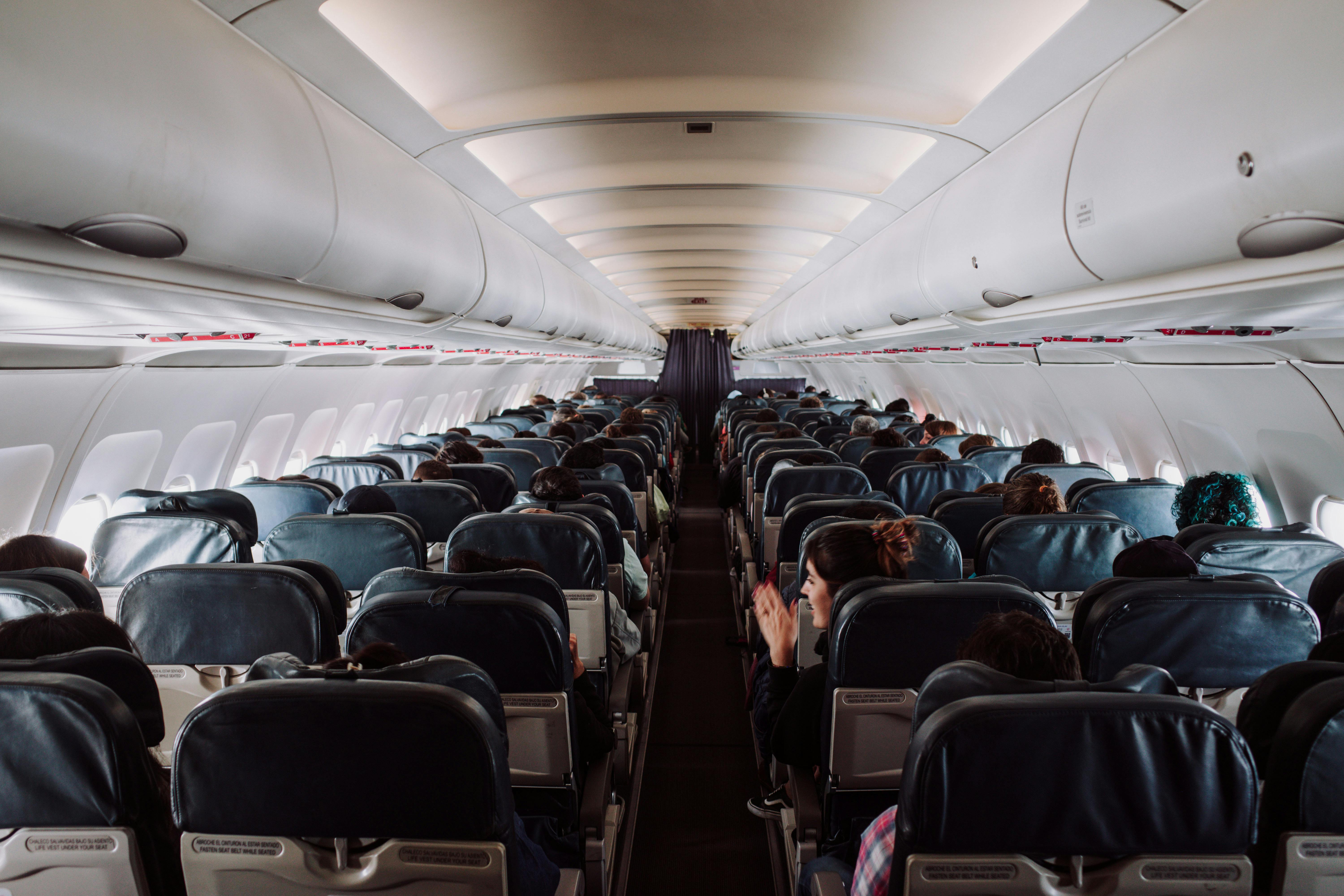
Boarding is one of the slowest parts of a turnaround and one of the most studied. The order airlines use is a compromise, and it is rarely the fastest available.
The queue is blocked by two separate actions
Passengers stop moving down the aisle for two reasons: someone is stowing a bag overhead, or someone is waiting for a seatmate to stand up and let them in.
Both create a blockage that halts everyone behind. Boarding speed is therefore governed by how often these blockages occur and how far apart they are, not by walking pace.
Any effective boarding scheme is really a scheme for spacing those blockages out. Methods that put many bag-stowers next to each other in the aisle perform badly.
Back to front is intuitive and slow
Boarding the rear rows first seems orderly, but it concentrates every passenger in the same section of aisle at the same moment. Blockages stack directly behind one another.
Schemes that spread passengers along the length of the cabin do better, because two people can stow bags simultaneously when they are many rows apart.
Filling window seats before middle and aisle seats also removes the second blockage type entirely for most of the process. Combined approaches are consistently faster in trials.
Revenue considerations override pure speed
Priority boarding is a product. Passengers pay for it directly or receive it through loyalty status and premium cabins, and that revenue is not something an airline gives up for efficiency.
Because those passengers board first and sit toward the front, the cabin fills in a pattern that no speed study would recommend. The order reflects who paid, not what flows.
Overhead bin space compounds this. Where bags are charged for, passengers carry more into the cabin, and early boarding becomes valuable specifically because bin space runs out.
Load balance sets limits on the free-for-all
Open seating, where passengers choose any seat, is fast but produces an unpredictable weight distribution. On smaller aircraft that is a genuine constraint rather than a theoretical one.
Crews on small regional types may direct passengers toward particular sections to keep the aircraft in balance. The instruction sounds arbitrary and is a loading calculation.
Larger aircraft have more tolerance, which is why open seating appears mainly on single-aisle fleets and why assigned seating dominates elsewhere.
The gate is managed as much as the aisle
Much of the delay happens before anyone boards. Gate staff must resolve seat duplications, standby passengers, oversized cabin bags and late arrivals, all while the queue forms.
Airlines increasingly try to move those tasks earlier, closing check-in sooner and tagging cabin bags at the gate before boarding starts rather than during it.
The measurable effect of any boarding method is modest compared with these interruptions, which is why two airlines using the same scheme can achieve quite different results.